The new rules help donors… just not in 2025.
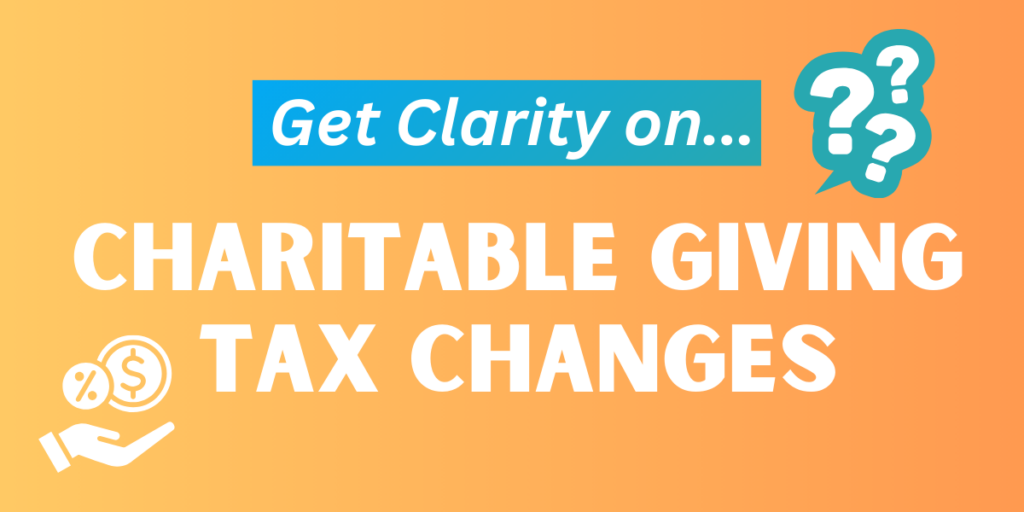
There has been a lot of buzz about the One Big Beautiful Bill Act (OBBBA) and what it means for charitable giving. Some of that buzz has been helpful. Some has caused confusion. Many nonprofits have heard conflicting takes about whether these new rules should influence year-end fundraising in 2025. The short answer is no. The longer answer is what follows.
NOTE: I am not an accountant or attorney, nor do I play one on television. Please check with your own tax or legal professional before making any major decisions.
The biggest thing to know: The new charitable deduction changes do not take effect until 2026
The charitable giving provisions in OBBBA begin with the 2026 tax year. Donors cannot use any of the new deductions for gifts made in 2024 or 2025. Nothing in the new law changes how year-end fundraising should be framed this year, and nonprofits should avoid implying that donors will receive new tax benefits for 2025 gifts.
Key point: Your year-end 2025 messaging stays the same. Avoid suggesting new or expanded deductions that do not yet apply.
A new above-the-line charitable deduction is returning
Starting in 2026, taxpayers who do not itemize will once again have access to a small above-the-line charitable deduction. The new provision allows up to $1,000 for individuals and $2,000 for married couples filing jointly. This is designed to encourage more giving among households that typically take the standard deduction.
Key point: This may broaden participation among small- and mid-level donors over time, but the change will likely be gradual.
Donor behavior will not change overnight
Even with new tax benefits on the horizon, most donors are unlikely to shift their giving behavior immediately. Many people do not follow tax law changes closely, and most will not be aware of the new deduction until they file their 2026 taxes in early 2027. For small and mid-level donors, giving is still driven primarily by mission, trust, and emotional connection.
Key point: This is a long game. Expect donor education to matter more than short-term revenue shifts.
Major donors will see little impact
For donors who already itemize, very little is changing. High-capacity donors will continue to use itemized deductions, and the new above-the-line deduction does not affect them. Monthly donors, whose giving is usually rooted in habit and values rather than tax optimization, are also unlikely to make changes.
Key point: Your major donor strategy does not need to shift because of these new rules.
What nonprofits should do
Nonprofits should keep their 2025 year-end messaging simple and focused on mission, trust, impact, and emotional connection. Now is also a good time to prepare a clear, donor-friendly explanation of the upcoming tax changes for early 2026. Training staff and board members on what is and isn’t changing will help prevent misinformation, and planning donor education for mid-2026 ensures people receive the correct information at the right time.
Key point: Clarity builds trust. Donors appreciate straightforward explanations without unnecessary complexity.
Conclusion
The One Big Beautiful Bill Act (OBBBA) has opportunities for middle-income donors down the road, but it won’t change how nonprofits message their appeals this year. What matters most right now is clarity, accuracy, and building trust. Over the next year, nonprofits can begin preparing simple educational materials so donors feel informed when changes actually arrive.
Want help thinking through your fundraising or donor communication strategy? Email us at info@nextinnonprofits.com and let’s talk!