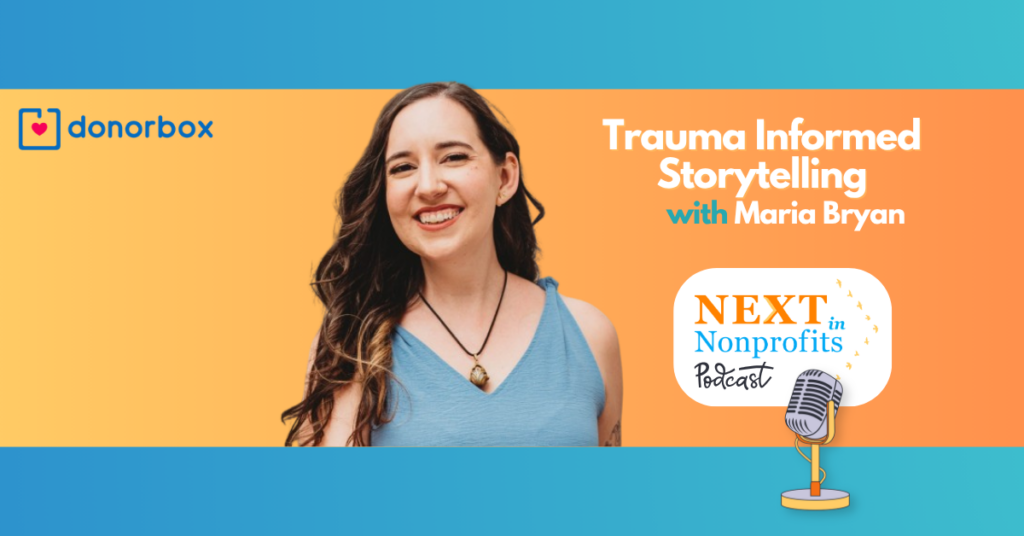
Maria Bryan is the Partnership Marketing Manager at Donorbox, which offers “Robust online and on-location fundraising with meaningful donor relationship management, so your mission thrives.”
Maria joins host Steve Boland to talk about her work with trauma-informed storytelling. She begins with the idea to first, protect and support people we work with in telling stories. The lines can get fuzzy with the big video at the donor gala, and it is important to practice a “Hippocratic oath” of ensuring we do no further harm when talking about trauma. We can share impact stories without harming either the people who’s story your telling or the person who may be listening for the first time.
Maria cautions us to slow down and take time to tell those stories. Consent forms (with expiration dates!) are good and important, but conversations about the impact of sharing is important. Trauma responses can include fight, flight, freeze, or fawn. A slow consent process includes asking what is the goal of the person telling their story. Each person has their own agency (listen for the conversation about agency versus “empowered””). Trauma comes in many different forms, including vicarious trauma. Simple content warnings, and scaling content warnings are helpful ways to move forward.
Maria is the host of the When Bearing Witness podcast, where listeners can hear more about her work. Listen now by clicking the player above, download the file for later here, or subscribe to the podcast on your phone for automatic updates. Get more details on how to subscribe on our podcast page. Please consider leaving a review on Apple Podcasts or your platform of choice. Thanks!