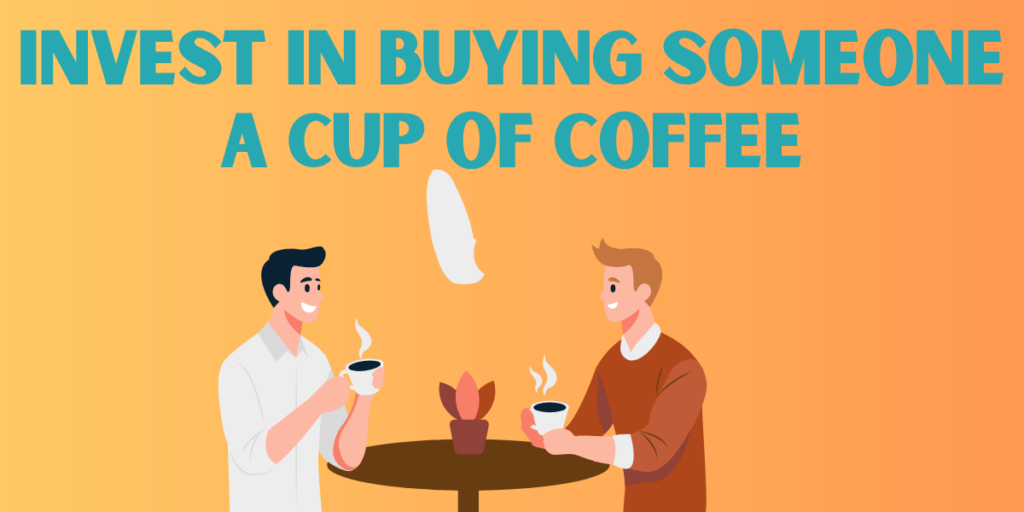
Invest in relationships, one coffee at a time
Most of the best jobs are never posted. You get them because someone thought of you, or because someone you knew thought of someone who thought of you. Nonprofit funding often works the same way.
A significant share of grant dollars never appears on a deadline calendar. There’s no open Request for Proposals, no public notice; just a letter of invitation that goes to organizations the program officer already knows. If your organization isn’t part of those conversations, you’re competing for the smaller pool of money that gets advertised publicly, where there is more competition and alongside everyone else who also wasn’t in the Room Where It Happens.
So who gets into this mythical Room?
The answer isn’t always just better grant writing. Writing clearly within the constraints is table stakes for sure. You aren’t going forward if they ask for a workplan that details a budget and you don’t have that. The answer to getting to submit that great application is relationships with people who have relationships with funders. This is not only with the foundation itself (though that helps too), but with the connectors: the program officers who have lunch with each other, the wealth advisors who work with donors looking to give more strategically, the board members who sit on community foundation committees. Each of those people can say your name at exactly the right moment. Most of them are approachable, if you show up in the right places.
This is also work that your board can do, and arguably better than you can. A board member who belongs to the same civic organization as a major donor, or who serves on a committee alongside a foundation trustee, has access that no grant portal can replicate. But most boards have never been asked to use those relationships with any intention. Most executive directors haven’t given them a clear, specific way to do it.
So what does that look like in practice?
Start by picking a specific funder who aligns to your work, but where you don’t currently receive financial support. Ask your board members or advisory committee or whatever to find a connection to that group. Do a 2nd degree LinkedIn search (we can show you how), have people search their sent emails for a group message mentioning this funder.Give them one funder per meeting to find an in, and then someone has to take that someone out for a coffee (or tea or whatever). Who shows up at the events where funders show up? You may have more connectors in your network than you realize, we may just need a map.
Then make specific asks. Not “please help us raise money” — that’s too easy of a “no”. Try instead: “Would you be willing to introduce me to your contact at the XYZ Foundation? I’d like to understand their priorities.” That’s something a volunteer supporter can actually do. It’s low-stakes for them and potentially high-value for you.
It’s also important to invest in showing up yourself. Funder briefings, community convenings, sector conferences — these aren’t just professional development (though they are that too). They’re the places where program officers learn your name, start to associate you with good work, and begin to trust precedes an invitation. That trust accumulates slowly and pays out in ways that are hard to trace but impossible to replicate.
NEXT in Nonprofits talks about this a lot with our clients, because it tends to be the piece that gets skipped when organizations are in a reactive fundraising posture. There’s always a deadline to meet, always a report to write. Relationship-building feels less urgent — right up until the invitation-only RFP lands in someone else’s inbox.
Great grant writing gets you across the finish line. The invitation to run often comes from somewhere else entirely.