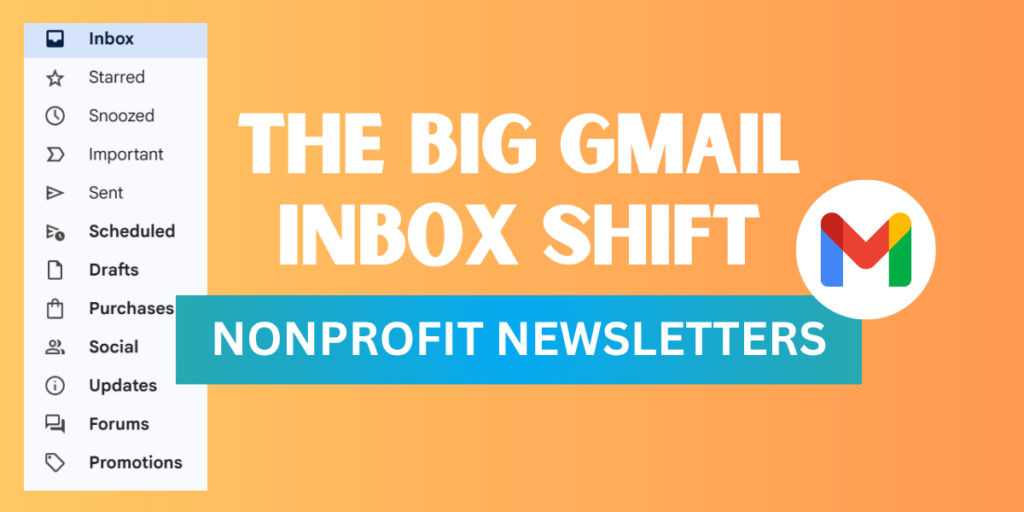
Your donors’ Gmail inboxes are about to get a lot more crowded, and it’s not because of you.
Google quietly rolled out a new program this week making it easier for political candidates, parties, and PACs to skip Gmail’s spam filter starting on September 8. You’re a 501(c)(3), not a PAC, so why does this matter to you?
Your donors’ inboxes are about to get noisier.
Every political appeal competing for space is also competing with yours — for the same two seconds of subject-line attention, the same limited patience for “give now” messaging.
Inbox placement is about to become a far more visible, far more competitive game. Here’s how to keep winning it.
Do This
- Treat your spam complaint rate as a real KPI (key performance indicator). Segment aggressively and consider archiving people who’ve stopped opening. You’ll need to keep your spam rate below 0.3% over a 14 day window as to not violate the new policy.
- Lead with story, not solicitation. Research finds donors respond more to one specific, relatable story than to statistics about scale — and more stats can actually blunt urgency, not build it.
- Send less, but better. This isn’t the moment to raise your cadence just because more mail is getting through.
- Make unsubscribing effortless. A donor who can’t opt out easily marks you as spam instead — and that follows your domain’s reputation.
- Segment your list. Major donors, sustainers, lapsed donors, and first-time givers shouldn’t get the same email.
- Be Human, be You. In a digital scape where it feels like diversity in language and expression is flatting out, having a little personality, or even a typo feels like a real person and a real cause to get behind – and will garner attention, respect, and action as readers weed their inboxes.
- Continue to have subscribers opt in. While it may be tempting to dump a spreadsheet of email addresses into your sender list, ensure that you have permission or at the very least, targeted relevance. For example, are you sending a recap of an event they attended? That’s an appropriate use! But don’t assume they want your weekly newsletters.
In 2025 email revenue increased by 16%, according to Marketing Charts annual report. And with your emails reaching more inboxes, there’s an opportunity to move your audience into action more than ever.
Don’t Do This
- Don’t borrow political email tactics. Fake urgency and “LAST CHANCE” subject lines work for campaigns with short timelines and no need for repeat trust. It’s corrosive for an organization that needs donors to come back.
- Don’t ignore your own deliverability data. Whoever manages your email marketing platform should be able to tell you your current spam complaint rate, open rates, click rates, and unsubscribes today. If they can’t, start there by gathering those metrics.
- Don’t deprioritize email strategies. Email marketing remains one of the highest-ROI channels nonprofits have — the orgs sending thoughtful, well-targeted email will stand out against the increased noise..
Want a second set of eyes and hands for your email marketing strategy, newsletter writing, and audience segmentation tactics? Email us at info@nextinnonprofits.com.